Sports First Aid Course Coaches Can Rely
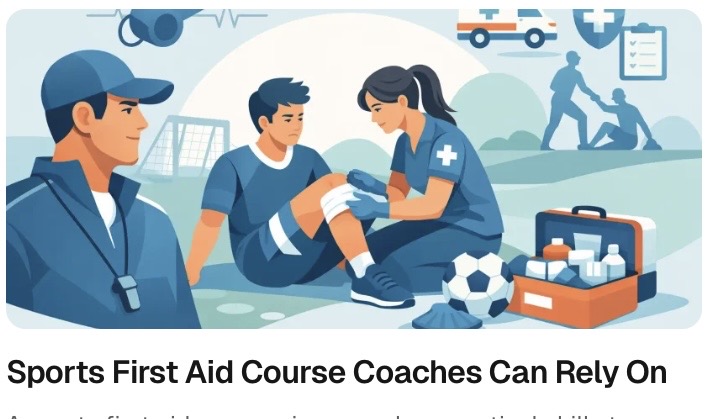
A player lands awkwardly, stays down, and the sideline goes quiet. In that moment, a sports first aid course for coaches is not about memorizing a textbook. It is about knowing how to assess the scene, protect the athlete, call for help when needed, and take calm, practical action until further care arrives.
Coaches are often the first adults to reach an injured player. Whether you lead a youth soccer team, a school basketball program, a community running club, or an adult recreational league, first aid training gives you a clear process to follow when pressure is high. It also helps you make safer choices before an injury happens, from checking the playing area to having emergency contacts and medical information available.
## Why coaches need sports first aid training
Sport brings predictable risks: falls, collisions, sprains, cuts, heat illness, asthma symptoms, and head injuries. Most incidents will not require an ambulance, but all deserve an appropriate response. A trained coach can provide immediate care, recognize when a player needs medical assessment, and avoid actions that could make an injury worse.
The value of training goes beyond the treatment itself. Players, parents, and club volunteers need to know that the person leading a session takes safety seriously. A coach who can respond with purpose helps create a more confident and responsible sporting environment.
First aid training also supports good decision-making. It is easy to feel pressure to get a player back on the field, particularly during an important game. A coach's role is not to diagnose an injury or replace a healthcare professional. It is to recognize warning signs, provide appropriate first aid, document what happened, communicate clearly, and keep the athlete out of play when there is doubt.
## What a sports first aid course for coaches should cover
A useful course should focus on the incidents coaches are most likely to face and allow time for hands-on practice. Watching a demonstration is helpful, but practicing a recovery position, using a first aid kit, or responding to an unconscious casualty builds the confidence that matters at a game or training session.
Core training should include how to assess an injured or ill person safely, control bleeding, manage wounds, and respond to fractures, sprains, strains, and suspected spinal injuries. Coaches should understand how to reduce further risk by stopping play, keeping other participants clear, and avoiding unnecessary movement of an injured player.
Cardiac emergencies must also be part of the conversation. Sudden cardiac arrest can occur in sport, including among people who appear fit and healthy. Coaches should know how to recognize unresponsiveness and abnormal breathing, summon emergency services, [begin CPR if trained](https://firstaidsafely.com/courses/cardiac-first-response-cfr-community-level-phecc/), and use an automated external defibrillator, or AED, as quickly as possible. The best training makes these steps practical and clear rather than intimidating.
A course should also address conditions that can develop quickly during activity. These may include heat exhaustion and heat stroke, dehydration, breathing difficulties, allergic reactions, seizures, diabetic emergencies, and fainting. The correct response depends on the person, the symptoms, the environment, and any individual care plan already in place. Training helps coaches identify red flags and avoid waiting too long to seek help.
### Head injuries require a cautious approach
Head injuries are one area where coaches should never guess. A player who has had a collision or fall may initially say they feel fine, then develop symptoms later. Headache, dizziness, confusion, nausea, balance problems, changes in behavior, sensitivity to light, or difficulty concentrating should be treated seriously.
When a concussion is suspected, the athlete should be removed from play and should not return that day without appropriate medical guidance. A coach should not use a player's desire to continue as evidence that they are safe to do so. Clear communication with a parent, guardian, team official, or healthcare provider is essential, especially in youth sport.
### Practical skills are more valuable than theory alone
The right course gives coaches an opportunity to ask questions based on their own setting. A contact sport has different risks from a tennis club, swimming program, or youth athletics group. Indoor facilities, remote pitches, hot-weather tournaments, and teams with young children all require slightly different planning.
Training should help coaches think through real scenarios. What happens if the injured player is at the far end of a field? Who calls emergency services? Who meets responders at the entrance? Who supervises the rest of the team? Where is the AED located? These details are often what turn a good first aid response into an organized one.
## First aid training is only one part of safer sport
Even a well-trained coach needs a plan before an emergency occurs. A first aid kit should be accessible, stocked, and suitable for the activities being delivered. Coaches should know the location of the nearest AED and confirm that it can be accessed when practices and games take place.
It also helps to keep current emergency contact details and relevant medical information securely available at every session. This may include allergies, asthma, diabetes, seizure conditions, medication requirements, and individual emergency action plans. Information should be handled respectfully and shared only with the people who need it to protect the participant.
Clubs should establish who has responsibility for first aid at each event. On a small team, that may be the coach. At a larger tournament, there may be designated first aid personnel, athletic trainers, or medical staff. Coaches still need to know their role, how to contact the right person, and what to do until support arrives.
## Choosing the right course for your coaching group
Not every first aid course is designed around sport. When comparing options, look for training that includes sports-related scenarios, emergency response skills, and practical assessment. Ask whether the course covers CPR and AED use, how much hands-on time is included, and whether the certification meets the requirements of your club, governing body, insurer, school, or venue.
Course length and delivery method matter too. Individual coaches may prefer a scheduled classroom course, while a club may benefit from on-site group training. [On-site sessions](https://firstaidsafely.com/courses/sports-first-aid/) can be tailored to the age group, sport, venue layout, and common risks your coaches face. Blended learning can also suit busy volunteers when it combines self-paced study with an in-person practical assessment.
Certification requirements vary. Some organizations specify a particular credential, while others focus on the content and recertification period. Check the standard before booking, particularly if you coach in a school, [work with children](https://firstaidsafely.com/courses/paediatric-first-aid/), travel with teams, or are responsible for a facility. The least expensive course is not always the best choice if it does not provide the practical skills or recognition your role requires.
## Building confidence across the whole club
A single trained coach is valuable, but a club is safer when several people understand the emergency process. Consider training assistant coaches, team managers, volunteers, facility staff, and regular event organizers. That spreads responsibility and ensures a capable person is available if the head coach is injured, absent, or managing the rest of the group.
First Aid Safely provides practical first aid and cardiac response training that can be adapted for sports clubs, schools, and community groups. Group training can be delivered around your team schedule and shaped around the situations your coaches are most likely to encounter.
After training, keep the learning active. Review your emergency action plan before a season begins, locate the first aid kit and AED before every event, and talk through who will take each role if an incident occurs. A short pre-game safety check can prevent confusion later.
The best time to prepare for an injured player is before the whistle blows. Give your coaches the skills, equipment, and clear plan they need, so that when the sideline goes quiet, someone is ready to act.


Comments
Post a Comment