First Aid Training for Schools That work
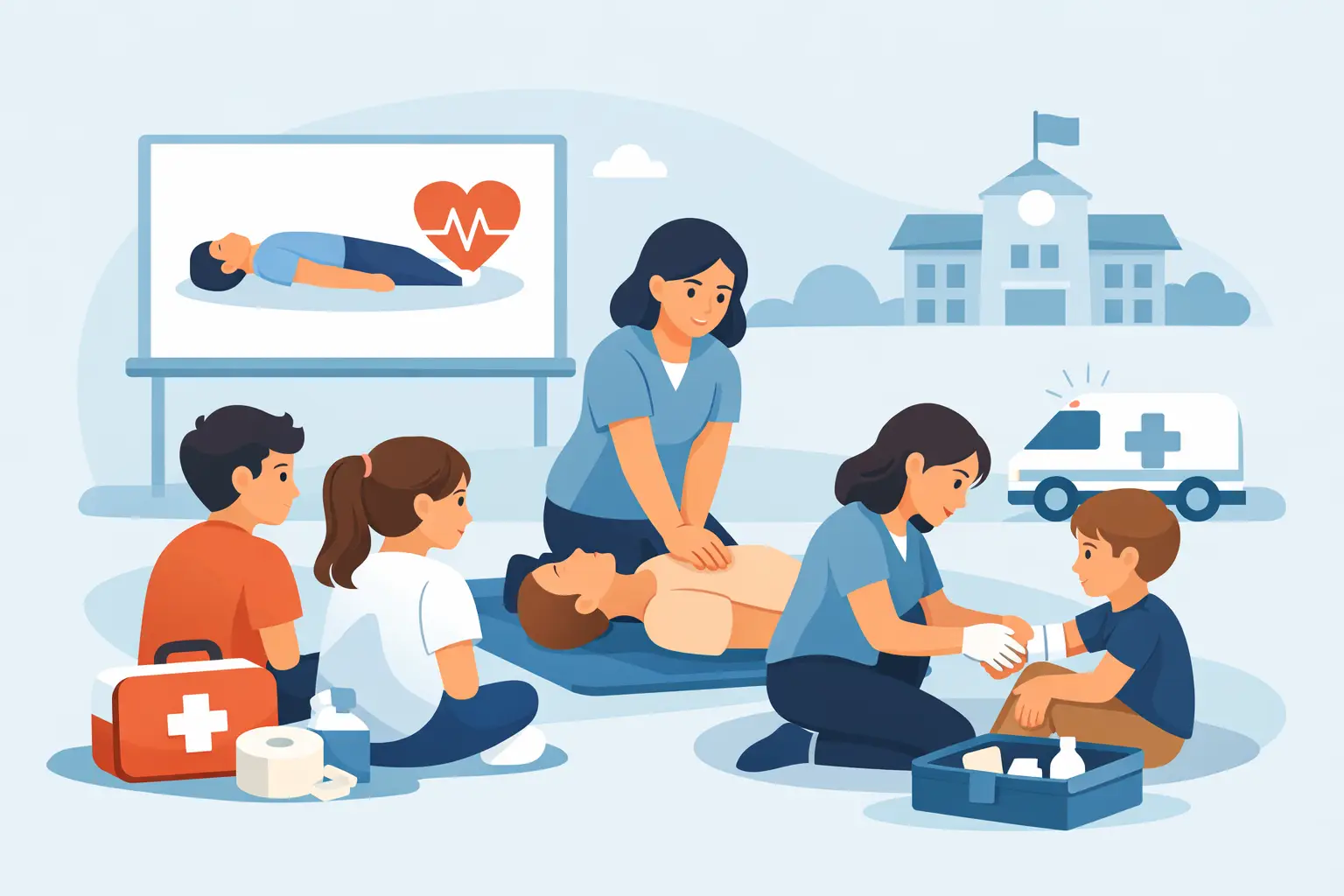
A child falls hard on the playground, a student has an asthma attack during class, or a staff member becomes unwell at a school event. In those first few minutes, calm and capable action matters. **First aid training for schools** helps teachers, special needs assistants, office teams, coaches, and school leaders respond appropriately while emergency services are on the way.
For a school, training is not simply a certificate to file away. It is a practical part of safeguarding students, supporting staff, and creating a safer environment for everyone who walks through the gates.
## Why schools need practical first aid skills
Schools bring together large groups of children and adults every day. The range of possible incidents is wide, from minor cuts and nosebleeds to seizures, allergic reactions, diabetic emergencies, choking, serious falls, and sudden cardiac arrest. Staff do not need to diagnose every condition, but they should know how to recognize when an emergency is developing, call for help, and provide safe immediate care within the limits of their training.
Confidence is one of the biggest benefits. A staff member who has practiced CPR, recovery position, choking response, and the use of an AED is far more likely to act promptly than someone trying to remember a procedure from a poster. Good training replaces panic with a clear sequence: assess the scene, protect the person, alert emergency services, and give appropriate care.
It also supports the whole school community. Parents rightly expect that the adults caring for their children can respond in an emergency. Staff deserve the same reassurance when they are responsible for a busy classroom, a sports session, a field trip, or an after-school club.
## What first aid training for schools should cover
The right course depends on the age groups in the school, the activities offered, the number of trained staff available, and the school’s own risk assessment. An elementary school with a preschool program may need a stronger focus on pediatric emergencies. A high school with active sports teams may need additional [sports first aid](https://firstaidsafely.com/courses/sports-first-aid/) and cardiac response skills.
A useful school-based course should always include hands-on practice rather than relying only on slides or videos. Staff need time to work with training manikins, practice chest compressions, use an AED trainer, and rehearse responses to realistic situations.
Core topics commonly include:
- assessing an emergency and contacting emergency services
- CPR and AED use for adults, children, and infants where relevant
- choking response and recovery position
- bleeding, shock, burns, fractures, and head injuries
- seizures, asthma, diabetes, anaphylaxis, and other medical emergencies
- incident reporting, infection control, and safe use of first aid equipment
The best balance is practical rather than overwhelming. A school team may face many different scenarios, but the purpose is to give staff the actions that make the greatest difference before professional help arrives.
### Pediatric needs deserve specific attention
Children are not simply smaller adults. Their airway, breathing, behavior, and common medical risks can differ, particularly for infants and younger students. Schools that provide early childhood education, breakfast clubs, or after-school care should consider whether [pediatric first aid](https://firstaidsafely.com/courses/paediatric-first-aid/) is the most appropriate option for the staff working directly with younger children.
Training should also reflect individual student care plans. If a student has a known severe allergy, epilepsy, diabetes, or another condition, relevant staff need to understand the school’s procedures and their role in an emergency. This may require additional guidance beyond a general first aid course.
## Choosing the right training format for your staff
A course only works when staff can attend it and apply it. That is why flexible delivery matters. Schools often need training scheduled around classroom hours, staff development days, school breaks, or planned in-service sessions.
On-site group training is often the most practical option for a school. Staff learn together in the same environment where they will use the skills, and the instructor can discuss likely scenarios such as playground injuries, cafeteria choking incidents, gym accidents, or an emergency during a school assembly. It also makes it easier to include reception, facilities, transportation, and extracurricular staff who may be first on the scene.
Blended learning can suit schools that need to reduce time away from daily duties. Staff complete theory at their own pace before attending a face-to-face practical assessment. This approach can be efficient, but it should never remove the practical component. CPR, AED use, and choking response are physical skills that need supervised practice and feedback.
Open-enrollment courses may suit an individual staff member who needs a recognized qualification, while a tailored group course is generally better for an entire school team. The choice depends on staff numbers, scheduling needs, and whether the school wants content adapted to its own risks.
## Certification, compliance, and refresher planning
Schools should be clear about why they are arranging training. Some staff may need certified occupational first aid training because of their role or workplace responsibilities. Others may benefit from a shorter [basic first aid](https://firstaidsafely.com/courses/basic-first-aid-course/), pediatric first aid, or cardiac response course. Certification requirements and validity periods can vary by course, provider, employer policy, and local regulation.
A strong training plan does not stop when certificates are issued. Schools should keep a current record of trained staff, certificate expiration dates, AED locations, first aid kit checks, and emergency contacts. It is sensible to spread trained personnel across different areas and shifts rather than relying on one person who may be absent, teaching elsewhere, or off-site.
Refresher training is equally valuable. Skills fade when they are not used. Short practical refreshers can help staff retain the confidence to act, especially for CPR and AED response. A school should review its provision after significant incidents, changes in student needs, new activities, or staff turnover.
Compliance matters, but a certificate alone does not guarantee readiness. The practical question is whether the right people can identify an emergency and respond safely on an ordinary school day.
## Building first aid into school culture
First aid works best when it is part of daily school planning, not a separate task assigned to one designated person. Leadership teams can support this by making emergency procedures clear, ensuring supplies are accessible, and allowing trained staff to use their skills without hesitation.
Simple operational details make a meaningful difference. Are first aid kits checked and easy to reach? Is the AED clearly marked and available when the building is open? Do new staff know who the trained first aiders are? Are field trip leaders briefed on medications, emergency contacts, and the nearest emergency care options? These questions turn training into a working safety system.
Schools may also choose to offer age-appropriate basic first aid awareness to students. This is not about placing responsibility on children. It is about helping them know when to get an adult, how to call for help, and why quick action can protect a friend, sibling, or family member.
## A tailored approach makes training more useful
A generic course can cover core techniques, but school settings benefit from training that reflects real responsibilities. Staff working with young children may need pediatric scenarios. Coaches and physical education teachers may benefit from sports injury and cardiac response training. Front-office staff may need confidence managing an emergency until a trained colleague or emergency services arrive.
First Aid Safely provides flexible group training that can be delivered on-site and adapted to the needs of schools, childcare settings, sports groups, and workplace teams. Training led by a qualified instructor and examiner gives participants the opportunity to ask questions, practice skills, and leave with practical actions they can use.
When selecting a provider, ask about instructor qualifications, course recognition, practical assessment, certificate validity, group size, and the ability to tailor scenarios to your school. The cheapest option is not always the best value if staff leave without enough hands-on practice or clarity about what to do next.
A well-trained school team cannot prevent every emergency. It can, however, make sure that when a student, colleague, or visitor needs help, someone nearby is ready to respond with care, skill, and purpose. Contact us today to discuss training that fits your school’s staff, schedule, and safety needs.


Comments
Post a Comment