Who Needs First Aiders at Work and Beyond?
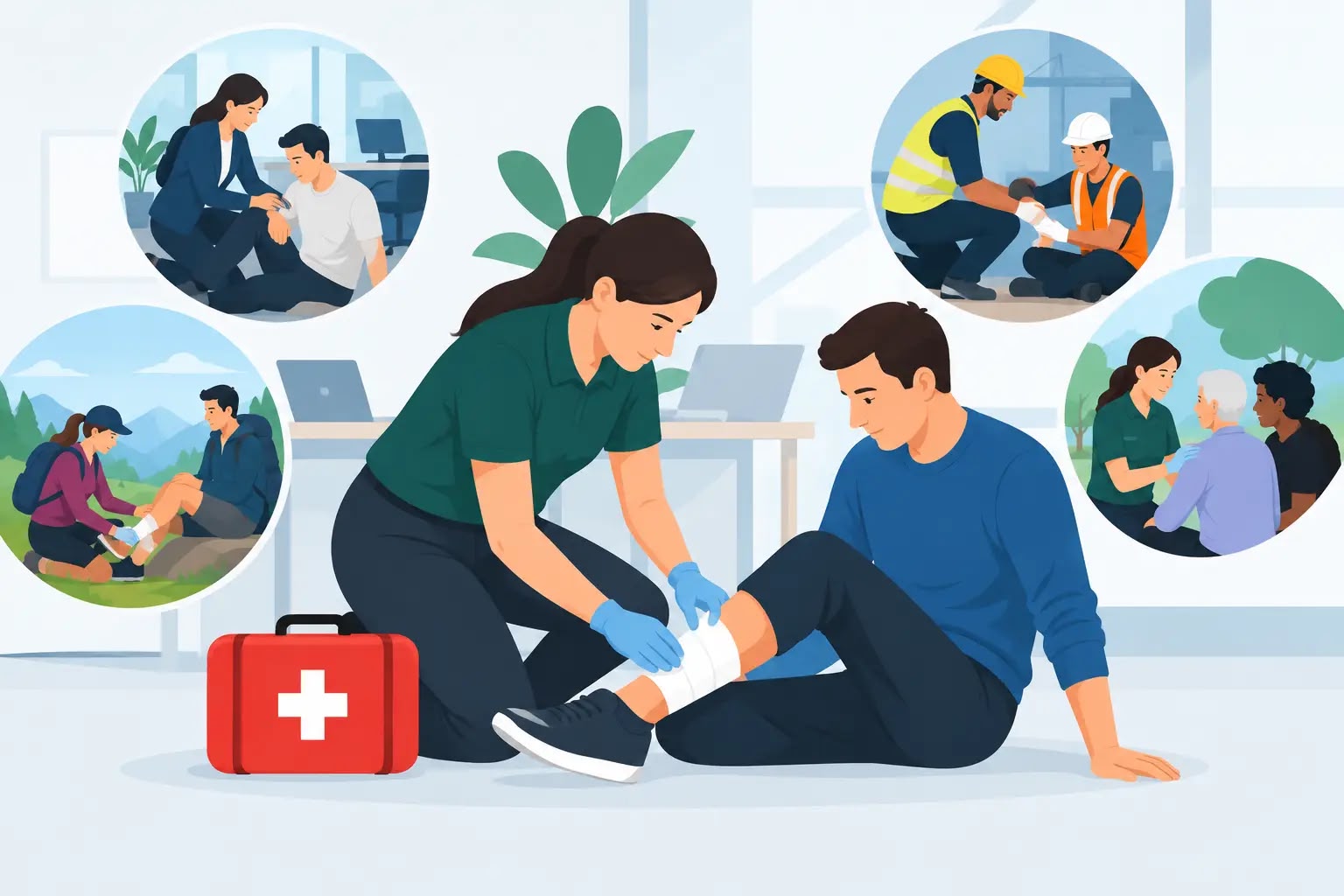
A child choking at a daycare center, a colleague collapsing in a busy office, or a player taking a hard fall during training all have one thing in common: the first few minutes matter. So, who needs first aiders? Any setting where people gather, work, learn, play, or receive care benefits from someone who can respond calmly before professional medical help arrives.
A trained first aider is not expected to replace emergency services, diagnose illness, or take unnecessary risks. Their role is to recognize an emergency, provide appropriate immediate care, call for help, and support the person until further assistance is available. For employers, clubs, and community groups, having trained people in place is also a practical part of responsible safety planning.
## Who Needs First Aiders in the Workplace?
Most workplaces need access to trained first aid support, but the number of first aiders required and the level of training needed depend on the work being carried out. A small low-risk office will not have the same needs as a construction site, warehouse, manufacturing floor, school, or care setting.
Employers should assess the real risks in their workplace rather than treating first aid as a box-ticking exercise. Consider the number of staff, shift patterns, remote or lone workers, visitors, the distance from emergency medical services, and the types of injuries or illnesses that could occur. A workplace with machinery, vehicles, manual handling, chemicals, heat, or work at height may need more trained responders and more comprehensive equipment than a typical administrative office.
It is also sensible to plan for absence. If one named first aider is on annual leave, working off-site, or unwell, staff should still know who can respond. Training more than one person creates reliable coverage and avoids placing all responsibility on a single employee.
### Offices, retail, and customer-facing teams
Office teams, stores, salons, restaurants, and service businesses may appear low risk, yet emergencies can still happen. Fainting, allergic reactions, diabetic emergencies, chest pain, slips, burns, cuts, and choking can occur without warning. Staff who deal directly with customers also need the confidence to act professionally when someone becomes unwell on the premises.
For these settings, basic or general first aid training can give staff practical skills while helping managers build a clear emergency response procedure. The best course will depend on the workplace risk assessment and any local regulatory requirements.
### Industrial, construction, and manual workplaces
Higher-risk environments require more detailed planning. Factories, workshops, construction projects, logistics operations, and maintenance teams may face injuries involving tools, machinery, falls, crush incidents, burns, or hazardous substances. In these workplaces, trained first aiders should understand how to protect themselves and others, control bleeding, respond to shock, manage an unconscious casualty, and communicate clearly with emergency services.
First aid training works best alongside good occupational safety practices. Safe systems of work, correct personal protective equipment, incident reporting, and manual handling training reduce risk. First aiders are there for the moments when prevention has not been enough.
## Childcare, Schools, and Family Settings
Anyone responsible for children should have age-appropriate first aid skills. Children can deteriorate quickly, and their common emergencies are different from those seen in adults. Choking, breathing difficulties, fever-related illness, allergic reactions, falls, head injuries, seizures, and burns all require a calm, informed response.
Childcare professionals, preschool teams, teachers, after-school staff, childminders, and activity leaders should consider [pediatric first aid training](https://firstaidsafely.com/courses/paediatric-first-aid/) that reflects the children in their care. Parents, grandparents, and babysitters can benefit too. A parent does not need to work in childcare to value the confidence that comes from knowing what to do if a baby chokes or a child is unresponsive.
Training also supports better communication with families. When staff can explain what happened, what care was given, and when medical advice was sought, parents receive reassurance during a stressful situation.
## Sports Clubs, Gyms, and Community Groups
[Sports first aid](https://firstaidsafely.com/courses/sports-first-aid/) is essential wherever physical activity takes place. Coaches, volunteers, team managers, fitness instructors, and club officials may be first on the scene when an athlete suffers a collision, sprain, suspected fracture, heat illness, asthma episode, or cardiac emergency.
The right response is not always to get a player back on the field quickly. A trained first aider knows when to stop activity, monitor the person, seek urgent medical care, and avoid moving someone unnecessarily. This is particularly important for suspected head, neck, or spinal injuries.
Community groups also need a plan. Youth organizations, faith groups, event committees, arts groups, and local classes should identify trained responders, make first aid supplies easy to find, record relevant incidents, and ensure someone can contact emergency services promptly. Large events may need additional planning based on attendance, location, activities, and access to medical support.
## Therapists, Care Professionals, and Client Services
Therapists and professionals working one-to-one with clients often operate in quieter environments, but that does not remove the need for first aid readiness. A client may faint, experience a seizure, have a panic response, disclose a serious medical concern, or become suddenly unwell during an appointment.
First aid training helps practitioners respond within their scope of practice while maintaining a safe, professional environment. It also supports sensible preparation: keeping emergency contact details available, knowing how to summon help, ensuring clear access for responders, and documenting incidents appropriately.
For care professionals who work in clients' homes or travel between locations, training is especially valuable. They may be alone when an emergency occurs and need to make quick decisions while waiting for additional support.
## Do Individuals Need First Aid Training?
You do not need to be an employer, coach, or childcare worker to train in first aid. Students, parents, drivers, caregivers, and members of the public can all use these skills. Emergencies rarely happen at a convenient time or in a place with a designated responder nearby.
Basic training can help an individual recognize cardiac arrest, begin CPR, use an AED, respond to choking, manage severe bleeding, and place an unconscious breathing person in a safe position. Just as importantly, it can reduce hesitation. People often remember that they should call emergency services, but they may be unsure what to do while help is on the way.
A first aid certificate is useful, but confidence and retained practical skills matter just as much. Refreshing training at appropriate intervals helps people stay prepared, particularly for skills such as CPR that are not used every day.
## Choosing the Right Training for Your Setting
The question is not simply whether you need first aiders. It is whether they have training suited to the people, risks, and environment involved. A pediatric course may be the right choice for a childcare team, while an industrial workplace may need a more comprehensive [occupational first aid approach](https://firstaidsafely.com/courses/occupational-first-aid-fetac-qqi-level-5-2/). A sports club may need training that addresses common activity-related injuries and emergency action planning.
Delivery options matter too. Open-enrollment courses can suit individuals and small numbers of staff. On-site group training can be more practical for organizations that need to train a full team, work around shift schedules, or use examples from their own premises. Blended learning can reduce classroom time while preserving the hands-on assessment needed to practice vital skills.
When selecting a provider, ask about the instructor's qualifications, the certificate issued, how long it remains valid, the practical elements included, and whether course content can be tailored to your workplace. First Aid Safely delivers flexible training for individuals, small groups, and organizations, with practical sessions designed around real situations people may face.
## First Aid Coverage Is a Shared Responsibility
A well-prepared organization does not leave emergency readiness to chance. Managers should make sure first aiders are known to staff, equipment is accessible and maintained, emergency numbers are visible, and procedures are reviewed after any incident. New employees, temporary staff, and volunteers should know where to find help from their first day.
No one can predict every emergency. But trained first aiders give a workplace, club, classroom, or family a better starting point when something goes wrong. The most helpful next step is to look at the people in your care, the risks around them, and the practical training that will help someone act when it matters most.


Comments
Post a Comment