Risks of Uncertified First Aid Training: 2026 Guide
First Aid Safely
First Aid Training Courses
https://firstaidsafely.blogspot.com/2026/09/blog-post.html
Table of Contents
- What Uncertified First Aid Training Actually Costs You
- The Real Risks of Uncertified First Aid Training: Harm, Liability and Compliance
- Workplace First Aid Training Requirements: What the Law Expects
- How to Check First Aid Course Accreditation Before You Book
- Online First Aid Training and Practical Skills: Where the Gap Opens
- First Aid Certificate Validity and Renewal: Keeping Certification Live
- Recognised Versus Uncertified Training: A Side-by-Side Comparison
- What to Do If You Discover Your Training Isn't Recognised
- Frequently Asked Questions
Last Updated: October 5, 2026
What Uncertified First Aid Training Actually Costs You
Uncertified first aid training is any course that does not lead to a certificate recognised by the body that regulates first aid instruction in your sector.
The risks of uncertified first aid training go well beyond a wasted fee. They include physical harm to a casualty, legal liability for your organisation, and compliance failures that can stall a licence application or trigger penalties.
Below, we break down each risk, show you how to check accreditation before you book, and explain what to do if you find out your training is not recognised.
The Real Risks of Uncertified First Aid Training: Harm, Liability and Compliance
Three risks sit at the centre of this problem: harm to the casualty, liability for the responder and the employer, and regulatory non-compliance. Each one is avoidable with a properly accredited course.
Physical Harm in High-Pressure Situations
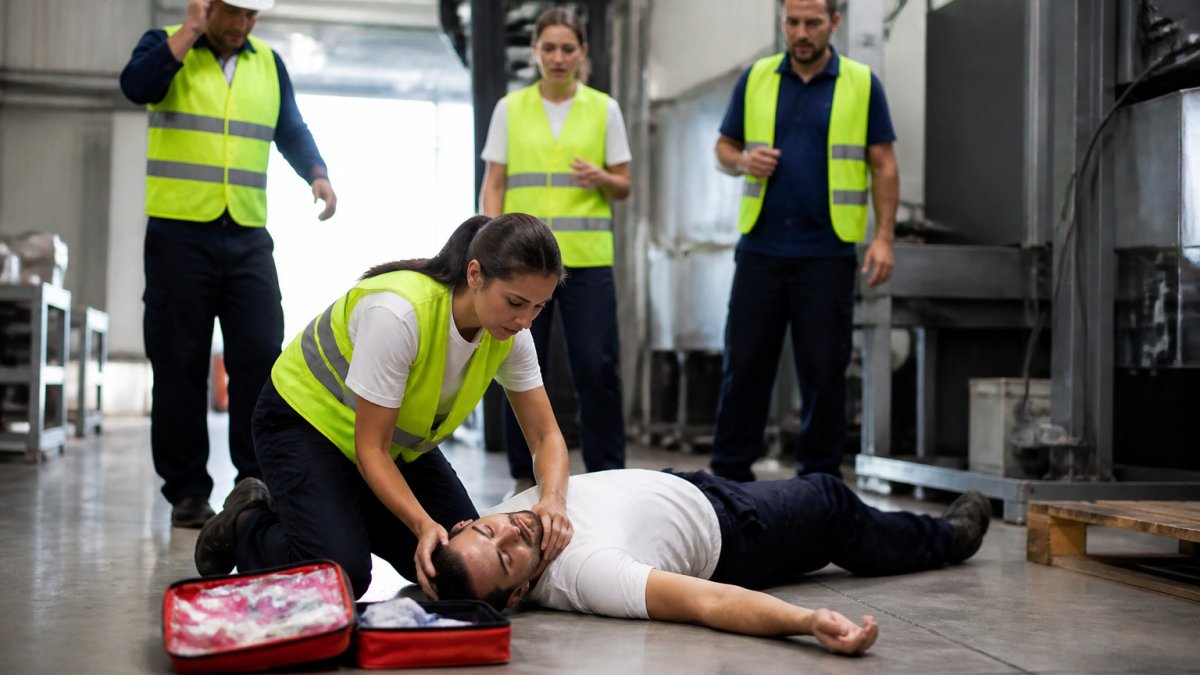
Poor training produces slow, wrong or hesitant action. In a cardiac arrest, every minute without effective CPR reduces the chance of survival (pubmed.ncbi.nlm.nih.gov). A responder who has never practised chest compressions on a manikin will hesitate when it counts.
Uncertified courses often skip practical assessment entirely. That means nobody has ever confirmed the learner can control bleeding, place a casualty in the recovery position, or use an AED correctly. The casualty pays for that gap.
The harm is not only to the casualty. A responder who attempts a technique they were never assessed on can cause additional injury, for example, incorrect hand placement during CPR, or moving a suspected spinal injury casualty when they should not. False confidence is its own hazard: someone who believes they are competent may attempt interventions beyond their training rather than calling for help immediately.
Legal Liability, Duty of Care and Fines
Employers owe a duty of care to staff and anyone else on their premises. Under the Safety, Health and Welfare at Work Act 2005, employers must ensure, so far as is reasonably practicable, the safety, health and welfare of employees. This includes making adequate first aid arrangements. The Health and Safety Authority (HSA) is the regulator that enforces this framework, and its guidance on first aid at work sets out how to assess needs and what adequate provision looks like.
If an incident leads to an HSA inspection or a personal injury claim, one of the first questions asked is whether first aid provision was adequate and whether responders were properly trained. A certificate from an unrecognised provider does not demonstrate competence. That weakens your position in any claim and can count against you in an inspection.
The consequences can include:
- Improvement or prohibition notices from the HSA requiring you to rectify deficiencies
- Fines on summary conviction or on indictment, depending on the seriousness of the breach
- Personal injury claims where inadequate training is cited as a contributing factor
- Difficulty obtaining or renewing certain licences or permits where first aid competence is a condition
Regulatory Non-Compliance and Audit Exposure
Beyond fines, uncertified training creates a compliance gap that surfaces at the worst possible time. Auditors, insurers and licensing bodies increasingly ask for evidence that first aiders hold current, recognised certification. If your records show certificates from a provider that cannot demonstrate accreditation, you may be treated as having no trained first aiders at all, even though staff attended a course.
The fix is straightforward: verify accreditation before you book, keep records of trainer qualifications and assessment methods, and build renewal into your safety management system. That way, when an inspector or insurer asks, you can show not just a certificate but the competence behind it.
Workplace First Aid Training Requirements: What the Law Expects
Workplace first aid training requirements in Ireland flow from the Safety, Health and Welfare at Work Act 2005 and the associated regulations. Employers must assess their first aid needs and provide adequate, trained personnel.
There is no single number of trained first aiders that fits every workplace. The right figure depends on:
- The size of your workforce
- The type of work and level of risk
- Shift patterns and site layout
- Distance from emergency medical services
For a small office, one trained first aider per floor may be enough. For a manufacturing site with machinery, chemicals or lone workers, you need more, and you need training that covers the specific hazards present.
The Health and Safety Authority guidance on first aid at work sets out how to carry out a needs assessment. We recommend reviewing it against your own risk assessment before you book anything.
How to Check First Aid Course Accreditation Before You Book
How to check first aid course accreditation comes down to one habit: ask for proof before you pay. A legitimate provider will answer every question without hesitation.
Six Questions That Expose an Unverified Course
- Who accredits this course, and can you show me the accreditation?
- What are the trainer's qualifications, and who examines the assessment?
- How much time is spent on practical skills, not just slides?
- What does the certificate say, and who issues it?
- How long is the certificate valid, and what is required to renew?
- Can you give me two references from organisations like mine?
If any answer is vague, walk away. Vague answers are the clearest sign of an unverified course.
Practical skills matter most, so ask how the course assesses them. A course with no hands-on assessment cannot confirm competence.
Online First Aid Training and Practical Skills: Where the Gap Opens
Online first aid training practical skills are the weak point of any fully remote course. You cannot learn effective chest compressions by watching a video. The gap is not about knowledge, it is about the physical competence that only comes from repeated, supervised practice.
What Online-Only Training Cannot Assess
A multiple-choice quiz can confirm that a learner knows the correct compression rate. It cannot confirm that they can actually deliver compressions at that rate, to the correct depth, with adequate recoil, on a real person. The same applies to:
- Controlling severe bleeding with direct pressure and, where appropriate, a tourniquet
- Placing a casualty in the recovery position without aggravating a suspected spinal injury
- Using an AED correctly, including pad placement and following the device prompts under pressure
- Recognising when not to intervene and when to call emergency services immediately
These are psychomotor skills. They require hands-on practice with feedback from a qualified instructor. A course that never assesses them cannot confirm competence, no matter how good the online content is.
Why Blended Learning Closes the Gap
Blended learning solves this. Theory is completed online at each learner's own pace, then practical skills are taught and assessed in person. Learners get flexibility without losing the hands-on element.
The in-person component is where competence is confirmed. A qualified instructor observes each learner performing the skills, corrects technique in real time, and signs off only when the learner can demonstrate them correctly. That sign-off is what an auditor or insurer will look for.
Research supports this approach. A study reported by PubMed Central on first aid training effectiveness found that training significantly increased knowledge among people without a medical background. A separate systematic review found higher written test scores among trained participants. But written scores are not the same as competent hands, which is exactly why the practical assessment matters.
Skill Retention and the Case for Refreshers
Even well-trained responders lose skills over time without practice. A common pattern is that compression depth and rate drift within months of training if they are not refreshed. This is why recognised courses build in refresher requirements rather than treating certification as a one-off.
First Aid Certificate Validity and Renewal: Keeping Certification Live
First aid certificate validity and renewal is where most organisations slip up. Certificates expire, staff move on, and renewal dates get missed.
A common approach is a simple renewal tracker:
| What to track | Why it matters | Review frequency |
|---|---|---|
| Certificate expiry date | Prevents lapses in cover | Monthly |
| Number of trained staff per site | Maintains adequate cover | Quarterly |
| Refresher due dates | Keeps skills current | Annually |
| New starter training needs | Covers gaps fast | On hire |
Skills fade without practice, so refresher training matters as much as the original course. Build renewal into your annual safety calendar rather than treating it as a one-off task.
Recognised Versus Uncertified Training: A Side-by-Side Comparison
The difference between recognised and uncertified training shows up in five places. This table summarises what separates them.
| Feature | Recognised training | Uncertified training |
|---|---|---|
| Trainer qualifications | Verified and examiner-led | Often unstated |
| Practical assessment | Required and recorded | Frequently skipped |
| Certificate | Names awarding body and expiry | Generic template |
| Compliance value | Supports audit and inspection | Little or no value |
| Skill retention | Refreshers built in | Learner left on their own |
The gap is about whether anyone has confirmed the learner can actually perform the skills.
What to Do If You Discover Your Training Isn't Recognised
Act quickly, and do not wait for the next renewal cycle. First, stop relying on the unrecognised certificate as proof of competence. Second, book accredited training for the affected staff.
Then work through these steps:
- Identify everyone holding an unrecognised certificate
- Assess your first aid needs again against your risk assessment
- Book accredited training with practical assessment
- Record new expiry dates in your renewal tracker
- Review how the unverified course was approved, so it does not happen again
If you are a first-time applicant for a licence or permit, unresolved training gaps can delay your application. Fixing them early is far cheaper than fixing them under pressure.
First aid training only works when it is recognised, current and practical. If you are unsure whether your certificates would hold up in an audit or an incident, that uncertainty is the risk. At FIRST AID SAFELY, our courses are led by a qualified PHECC instructor and examiner, built to meet Irish Health and Safety legislation, and delivered through flexible blended learning at your location. You get certificates on completion and training that prepares your team for real emergencies. Put your workplace compliance on firm ground.
Frequently Asked Questions
What damage might be caused by an untrained person doing CPR?
Incorrect compression depth or hand placement can fracture ribs, damage the sternum or cause internal injury. More seriously, hesitation and poor technique waste the minutes that matter most. Uncertified training gives false confidence without the supervised practice that builds reliable technique under pressure.
How can I check whether a first aid course is recognised?
Ask the provider for the name and registration details of the instructor, then confirm those details with the relevant awarding or regulatory body. Check that the certificate carries a unique reference, the instructor's name, the assessment date and the expiry date. A course that cannot name its instructor, its assessment process or its accrediting body is an unverified course. This is the fastest way to spot training that will not hold up during an audit or after an incident.
Is an online first aid course sufficient?
Online modules cover knowledge well but cannot assess practical skills such as compression depth, bleeding control or airway management. Blended learning closes the gap by pairing online theory with an in-person practical assessment, which is what employers need for genuine emergency preparedness.
Does a first aid certificate need to be renewed?
Yes. Skill retention drops without practice, and most recognised certificates carry a defined validity period, commonly two to three years. Diarise renewal dates and book refresher training before expiry, because an out-of-date certificate is treated the same as no certificate during a workplace inspection or after an incident.


Comments
Post a Comment